
4G Solar Cameras: Stop Theft in Parking Lots & Yards
Parking Lots & Open-Air Yards: How 4G Cameras Combat Theft & Vandalism
Parking lots, open-air storage yards, and construction sites are high-value targets for theft and vandalism. These expansive, often remote areas present a unique security challenge: a lack of pre-existing infrastructure. The absence of reliable power and wired internet makes deploying traditional CCTV systems prohibitively expensive and complex. As an engineer who has spent over a decade designing solutions for these exact scenarios, I’ve seen firsthand how this security gap leads to significant financial losses and operational disruption.
The core problem is simple. Criminals are drawn to the perceived lack of surveillance in these environments. They target vehicles for break-ins, steal valuable equipment and materials, or commit acts of vandalism and illegal dumping with a low risk of being caught. For business owners, the consequences are severe, ranging from direct asset loss to soaring insurance premiums and damaged client trust. This is where 4G solar security cameras have emerged not just as an alternative, but as the superior solution.
Why Traditional Security Fails in Open-Air Environments
To appreciate the innovation of 4G solar cameras, it’s crucial to understand the limitations of conventional systems in these settings. For years, installers and property managers have struggled with two primary options, both deeply flawed for large, undeveloped areas.
Wired CCTV systems, the traditional gold standard for building security, are an logistical and financial nightmare for open lots. They require trenching to lay power and data cables, a process that is expensive, time-consuming, and often impossible on paved or temporary sites. Furthermore, they are completely dependent on the power grid, leaving them useless during outages unless backed by costly uninterruptible power supplies (UPS).
Standard Wi-Fi cameras, while solving the data cable issue, introduce their own set of problems. Wi-Fi signals degrade rapidly over long distances and are easily obstructed by vehicles, containers, or terrain. Covering a large parking lot or storage yard would require a complex and failure-prone mesh of range extenders and access points. They are simply not engineered for the range and reliability needed for true remote security, a topic we explore in our 4G vs. WiFi camera comparison.
The Engineering Behind 4G Solar Security Cameras: A Game-Changer
A 4G solar security camera is an entirely self-sufficient security ecosystem. It integrates four key technologies to operate independently, anywhere there is a cellular signal. As a factory, we focus on perfecting the synergy between these components to deliver uncompromising reliability for our B2B partners.
1. 4G LTE Connectivity: The camera’s backbone is its built-in 4G LTE module. By using a data SIM card, it connects directly to the internet via a cellular network, completely bypassing the need for Wi-Fi or Ethernet cables. This grants you the freedom to install the camera in the most strategic location, not just where a cable can reach. It enables reliable, real-time access to live video, playback, and push notifications from any smartphone or computer in the world.
2. Solar Power & Battery Management System (BMS): A high-efficiency solar panel continually charges a large-capacity lithium-ion battery. However, the true engineering marvel is the Battery Management System (BMS). The BMS is the camera’s unsung hero, an intelligent circuit board that precisely controls the charging and discharging process. It prevents overcharging on sunny days and deep discharging during long periods of overcast weather, dramatically extending battery lifespan and ensuring the camera remains operational. This is the key technology that separates professional-grade systems from consumer gadgets, a detail we explain further in our analysis of BMS technology.
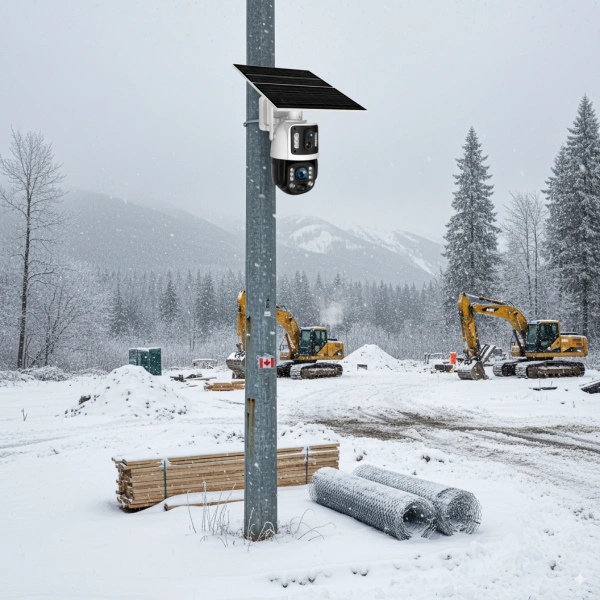
3. Low-Power Standby & Smart Detection: To maximize battery life, these cameras operate in a low-power standby mode. They activate instantly upon detecting motion. Early models used simple pixel-change detection, leading to countless false alarms from wind-blown debris or rain. Modern professional cameras, like those from UBOXCAM, utilize a combination of a Passive Infrared (PIR) sensor and AI-powered analytics. The PIR sensor detects body heat, and the AI algorithm then analyzes the shape to confirm if it’s a person or vehicle, virtually eliminating false alerts and conserving precious battery power.
Key Features for Maximum Security in Parking Lots & Yards
Beyond the core technology, specific features are crucial for effectively combating theft and vandalism. When sourcing cameras for your clients, it’s vital to focus on functionalities that deliver active, measurable results.
| Feature | Engineering Benefit & Business Value |
|---|---|
| Rapid Deployment | No cables or trenching required. A camera can be mounted and operational in under an hour. Value: Massively reduced installation costs and labor; perfect for temporary security at events or building sites. |
| Active Deterrence | Integrated high-decibel siren and high-intensity strobe light that can be triggered automatically by motion or manually from the app. Value: Proactively scares off intruders before a crime is committed, preventing loss rather than just recording it. |
| Advanced Night Vision | Options for Infrared (black & white), Starlight (retains color in very low light), and Full-Color (uses built-in spotlights). Value: Captures clear, evidentiary footage at night, enabling identification of faces, clothing, and license plates. See our night vision guide to choose the right tech. |
| PTZ (Pan-Tilt-Zoom) Control | Remotely control the camera’s lens to pan 355° and tilt 90°. A single PTZ camera can cover the area of multiple fixed cameras. Value: Reduces the total number of cameras needed, lowering overall project cost while increasing coverage. Ideal for a long-range solar security camera setup. |
| Rugged, Weatherproof Design | IP66 or higher rating ensures the camera is sealed against dust, rain, and snow. Industrial-grade housing withstands extreme temperatures. Value: Ensures long-term reliability and minimal maintenance, protecting the investment in harsh outdoor environments. |
Case Study: Securing a Remote Logistics Yard
To illustrate the real-world impact, consider a recent project with a mid-sized logistics partner.
- Problem: The company operated a 5-acre open-air yard for storing commercial trailers. With no on-site power or internet, it was a frequent target. They were losing over $70,000 annually from theft of tires, batteries, and cargo, plus significant costs from vandalism. Their insurance provider was threatening to increase their premium by 30%.
- Solution: We worked with their chosen installer to deploy eight UBOXCAM 4G solar PTZ cameras. We strategically positioned them on existing light poles to overlook entry points and cover the entire yard. The entire installation was completed by a two-person team in a single day. The security manager was given 24/7 remote access via our mobile app.
- Result: In the first three months, active deterrence features (automated siren and strobe light) prevented four separate intrusion attempts after hours. One attempted cargo theft was stopped in progress after a real-time alert allowed the manager to use the two-way audio to confront the thieves while notifying law enforcement. Within six months, theft and vandalism incidents dropped to zero. The client projected a full return on investment in under nine months and successfully renegotiated their insurance premium, saving them thousands.
Troubleshooting Common Field Issues
As an engineer, I believe in transparency. While highly reliable, field deployment can present challenges. Here’s how to troubleshoot the most common issues, demonstrating the robustness of a well-designed system.
- Issue: Camera appears offline.
Solution: First, check the SIM card’s data plan is active. Second, verify the 4G signal strength in the camera’s app settings; relocation by even a few feet can dramatically improve it. Third, check the battery status and ensure the solar panel is clean and oriented for maximum sun exposure. - Issue: Excessive false alarms.
Solution: This is almost always due to improper settings. Switch from basic motion detection to “PIR + Humanoid Detection.” This tells the camera to only trigger an alert when it detects both body heat and a human shape, ignoring animals, waving branches, or passing headlights. - Issue: Battery drains too quickly.
Solution: Excessive live streaming is the most common cause. Instruct users to view the live feed only when necessary. If the location has unusually low sunlight, the solution is to partner with a factory like UBOXCAM that can engineer a solution with a larger solar panel or higher-capacity battery pack to match the environment.
The Undeniable ROI of 4G Solar Security Cameras
For distributors, installers, brand owners, and security entrepreneurs, 4G solar cameras are not just a product; they are a complete solution to a persistent and expensive problem. They unlock security opportunities in previously unreachable markets: construction sites, farms, marinas, remote infrastructure, and expansive parking lots.
By shifting from passive recording to active, intelligent deterrence, these wireless outdoor security cameras provide a clear and compelling return on investment. They reduce theft, prevent vandalism, lower insurance costs, and provide invaluable peace of mind. Partnering with an experienced design and production factory ensures you can deliver a reliable, professional-grade solution that is customized to your clients’ unique needs.
Ready to provide your clients with a definitive solution for remote and off-grid security? Contact the UBOXCAM engineering team today to discuss our OEM/ODM capabilities and explore our comprehensive range of 4G solar security cameras.