
SDL500: The 30-Day Winter-Ready Solar Camera
30 Days Continuous Working in Rain: SDL500 Winter-Ready Solar Camera
In the security industry, the “winter battery drain” is a notorious challenge. Many off-grid projects in Northern Europe, Canada, or mountainous regions fail during prolonged rainy or overcast seasons. As an engineer with 13 years of experience in solar-powered security, I have seen too many deployments fail when the sun disappears for weeks. The primary culprit is often an inefficient Battery Management System (BMS) and poor low-light charging capability.
The SDL500 Winter-Ready Solar Camera was engineered specifically to solve this. It is designed to maintain 30 days of continuous operation without direct sunlight, ensuring your site remains secure even during the harshest winter months.
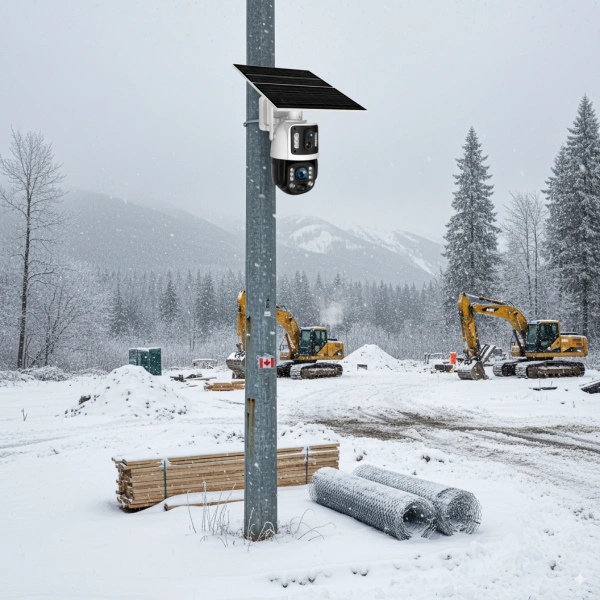
The Engineering Behind 30-Day Autonomy
Achieving 30 days of runtime in rain isn’t just about adding a larger battery; it’s about power optimization at the firmware and hardware level. Most standard cameras suffer from “vampire power draw”—the energy wasted while the camera is in standby mode. Our SDL500 utilizes an ultra-low-power chipset that reduces idle consumption by 40% compared to industry standards.
Furthermore, we prioritize BMS (Battery Management System) optimization. Our BMS ensures that even when the voltage drops due to cold temperatures, the system doesn’t shut down abruptly. It intelligently manages energy distribution, prioritizing critical motion detection and 4G transmission while throttling non-essential features during low-power states.
Comparison: Standard Solar vs. Winter-Ready SDL500
Choosing the right hardware for challenging climates is critical for ROI. Use the table below to compare typical market solutions with our specialized winter-ready technology:
| Feature | Standard Market Solar Camera | SDL500 Winter-Ready Camera |
|---|---|---|
| Rainy Day Performance | 3–5 days max | 30 days+ |
| Cold Weather BMS | Basic protection (often triggers early cut-off) | Advanced thermal and voltage optimization |
| Smart Power Logic | High idle power consumption | Ultra-low power sleep modes |
| Ideal Application | Sunny regions/Summer only | Remote, high-latitude, and wet climates |
Field Case Study: Northern Infrastructure Protection
Last year, we assisted a client managing a remote construction site security project in Scotland. They faced persistent cloud cover and daily rainfall. Standard PIR-based cameras were triggering false alarms due to rain and draining the batteries within a week.
The Solution: We deployed the SDL500 units configured with our proprietary AI-human detection firmware. By filtering out “environmental noise” like raindrops and swaying trees, the camera stayed in deep sleep, only waking up when actual human activity was detected. The result was a 200% increase in system lifespan during the winter months, eliminating the need for manual battery swaps.
Troubleshooting: Maintaining Power in Low-Light Conditions
If you are struggling with power loss in your current security setup, follow this professional checklist to diagnose and rectify the issue:
- Check Solar Panel Orientation: Even in cloudy weather, face the panel at a 45-degree angle toward the southern sky (in the Northern Hemisphere) to capture maximum diffuse light.
- Optimize PIR Sensitivity: If your camera is in a high-traffic area, constant triggers will kill the battery. Use the app to restrict detection zones to critical areas only.
- Inspect Battery Health: Use battery-powered security camera diagnostic tools to ensure your cells aren’t reaching end-of-life, which typically occurs after 300–500 cycles.
- Firmware Updates: Ensure your camera is running the latest firmware, which often includes patches for power efficiency.
Market Trends: The Shift Toward All-Weather Reliability
The demand for long-range solar security camera supplier solutions is shifting away from “cheap” hardware toward “reliable” infrastructure. For 4G operators and commercial installers, the cost of a site visit to replace a dead camera far exceeds the price of the hardware itself. Clients are now prioritizing TCO (Total Cost of Ownership) over upfront pricing.
As we move into 2025, we expect to see even more integration of environmental monitoring, as detailed in our analysis of 4G solar camera applications for flood prevention and wildlife protection. The industry is moving toward “set and forget” systems that provide consistent uptime regardless of the season.
Summary Checklist for Your Next Project
When planning your next off-grid security installation, keep these technical requirements in mind:
| Consideration | Engineer’s Recommendation |
|---|---|
| Location Climate | Analyze historical cloud-cover days (Lux levels). |
| Detection Logic | Ensure AI-Human detection to save energy. |
| Battery Chemistry | Only use high-grade Li-ion/LiFePO4 with integrated BMS. |
| Connectivity | Verify 4G/LTE signal stability in the deployment area. |
Are you a wholesale buyer or an engineering contractor looking for a reliable partner for your next large-scale deployment? We specialize in battery-powered security camera manufacturing and can provide custom configurations to suit your specific climate needs. Contact our engineering team today to discuss how the SDL500 can secure your sites through the winter and beyond.